Learn how to transform your app idea into a successful mobile startup — from prototyping to user acquisition.

What Is Email Verification? A Complete Guide (2026)
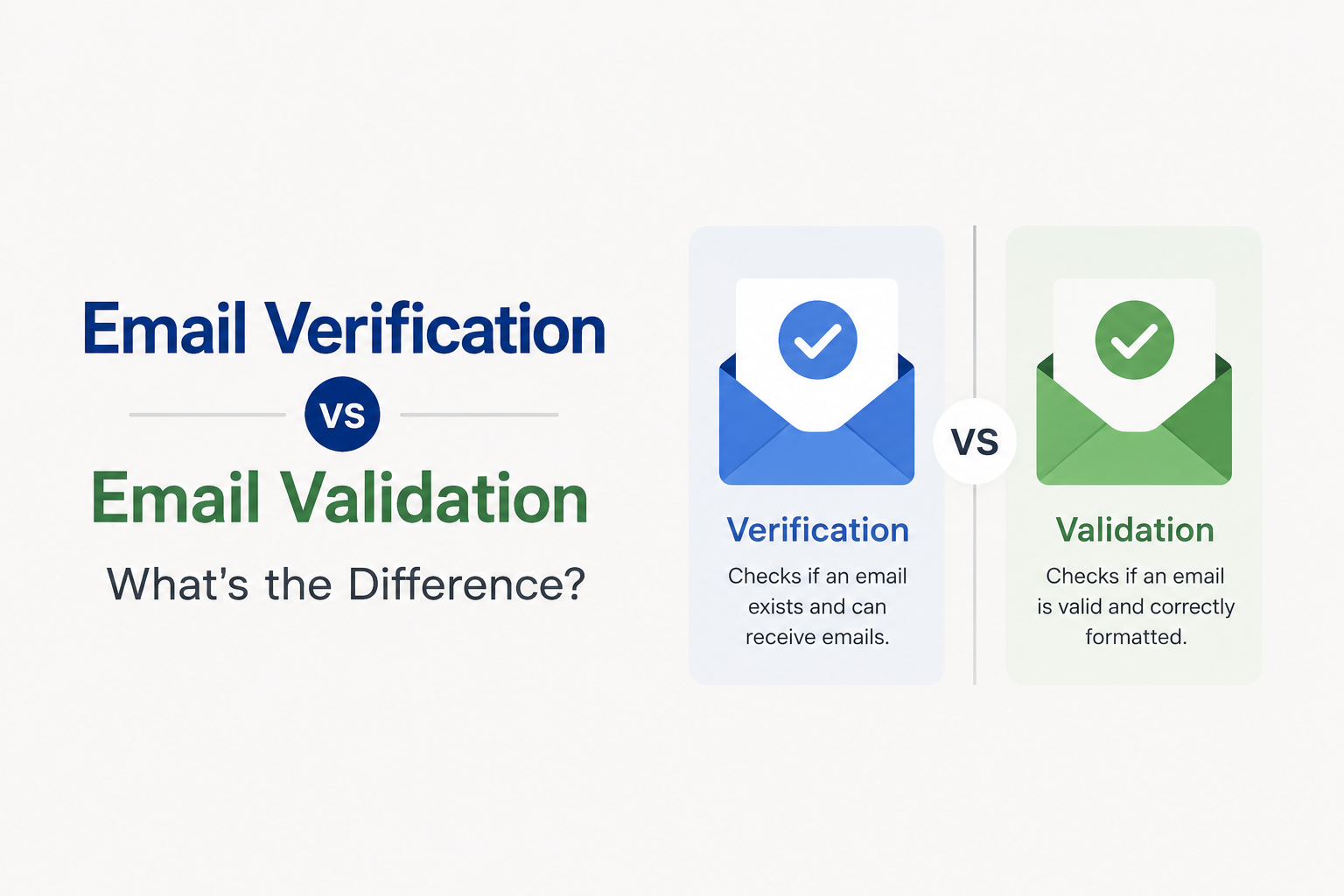
Email verification and email validation are often confused, but they serve different purposes in maintaining email list quality. While validation checks an email’s format and domain, verification confirms whether the address can receive messages. Understanding the difference helps businesses improve deliverability, reduce bounce rates, protect sender reputation, and maximise email marketing performance.
What Is Email Verification?

Email verification is the process through which it is checked whether an email is functional, real, and can receive emails correctly, among other details. It mainly looks at things like whether the mailbox exists (is reachable) and whether there are any problems with this email (invalid, high risk, disposable, or catch-all). This helps businesses in many ways. Among them, one of the main advantages of the email verification process is that businesses increase email deliverability, which in turn lowers bounce rates, preserves the sender’s reputation, and leads to accurate email lists.
What Is Email Validation?

Email validation process confirms that you’re entering a properly constructed email address and verifies the existence of its domain by the email address entered. It identifies typos and other formatting problems as well as nonexistent domains that would otherwise prevent emails from being sent. Validating email addresses enhances the quality of captured information but does not guarantee that the mailbox is currently running or that the message can be delivered.
Email Verification vs Email Validation: Key Differences
Even though email verification and email validation are related topics, they don’t perform the same job. Learning the distinctions between the two will enable organizations to decide on the best method for having good email lists and making the results of email marketing better.
Purpose
Apart from checking whether a given email address is in the right format and contains a valid domain, email validation also helps in making sure that the email address is correctly entered by the user.
On the other hand, email verification adds another level to this by verifying if such a mailbox really exists and can receive emails.
While the process of validation protects data entry errors related to formatting, the verification step allows companies to restrict their email activities only to the mailboxes that are working and might deliver, thus increasing the success rate of their campaigns and minimizing unnecessary delivery failures over time.
Checks Performed
An email validation checks the structure of the email address and detects any typos or misspellings. The domain is also checked to make sure it exists and has valid DNS records to support email delivery through it.
But an email verification performs more checks, such as checking for the existence of a mailbox, verifying domain configuration, analyzing SMTP response messages, and detecting whether an email address is temporary, dangerous, or “catch-all”.
These sophisticated checks quite a bit increase the confidence of businesses that their email messages will reach real and valid recipients rather than invalid mailboxes.
Impact on Deliverability
Validation prevents basic email entry errors and in this way enhances the quality of the gathered email addresses, but it does not determine email delivery.
Verification delivers high-quality email lists as it removes inactive, invalid, and risky email addresses, and increases the likelihood of more deliverability.
By doing so, it lowers bounce rates, guards sender reputation, and increases the number of emails getting to customers’ inboxes instead of ending up in the spam boxes or getting rejected by the receivers.
Best Time to Use
Email validity check is best for user registration, contact form fill-up, or customer sign-up for preventing invalid emails at the entry point.
On the other hand email checks are best done either before launching the email campaign or on an ongoing basis to filter out the old and non-deliverable contacts from your list.
If you combine the two techniques, you will definitely be left with a more efficient email list with higher deliverability rates and great results in all subsequent email campaigns on a long-term basis.
If a business grasps these crucial differences, it will not only be able to maintain a contact database with precise details but will also boost the probability of emails being successfully delivered and make the most of each email campaign.
Which One Does Your Business Need?
Selecting between email validation and email verification relies largely on how a business collects and processes email addresses. For instance, if the main goal is to avoid wrongly formatted or misspelled emails during the registration process, then email validation is the best option.
But businesses that regularly engage their emails to send newsletters, and updates must use email verification as a way to figure out which emails are active and can be delivered. Those who maintain large volumes of emails or are always updating their lists would be advised not to miss out on running both processes alongside each other.
Different factors like how the emails are collected, how often you do your campaigns, and how clean your databases are, determine what method is best for your email.
How EmailAnswers.ai Combines Email Validation and Verification
EmailAnswers.ai integrates email validation together with verification to offer a combined efficient method for maintaining a high-quality email list.
It first confirms the email’s format and the validity of the given domain and afterward determines the mailbox’s deliverability while pinpointing invalid emails, high-risk accounts, catch-all and disposable.
Using the complete solution in this way enables companies to not only increase delivery success rates but also lower the number of returned emails, maintain the reputation of their senders, and send their emails safely to targeted residents.
Best Practices for Keeping Your Email Lists Clean
It is necessary to ensure that the email list cleaning is done in order to achieve higher deliverability and lower bounce rates. By keeping a clean list, one can make sure that the emails reach their target audience.
- Check Email Addresses Often: Ensure that you check your email list often to eliminate any non-existent or inactive email addresses before launching email campaigns.
- Use Verification During Registration: Verify email addresses when people register for your site in order to avoid having wrong email addresses in your list.
- Remove Non-Engaging Contacts: Get rid of subscribers who will remain inactive for too long because they will reduce the effectiveness of the email marketing campaign.
- Get Rid of Duplicate Entries: You should ensure that there are no duplicate entries on your email address list, as well as out-of-date customer details.
- Monitor Email Deliverability: Keep checking your email deliverability by measuring bounce rate.
Following these guidelines allows companies to keep accurate email lists and increase campaign effectiveness while also creating better connections with their audiences.
Conclusion
Email validation and email verification are the processes that ensure the accuracy and quality of the email list.
Email validation ensures the prevention of wrong email addresses being added to your database, whereas email verification verifies whether the address is deliverable or not. The use of both processes ensures successful delivery of every email campaign.
FAQs
What is the difference between email verification and email validation?
Email validation is a way to check the correctness of the email address, its domain name, and whether the email address is written correctly, while email verification is another method that confirms mailbox availability and finds invalid emails, high-risk accounts, or disposable email addresses.
Is email verification the same as email validation?
The two aspects are not very similar, and they both serve their unique purposes. Validation stops wrong formatting and errors during entry whereas verification increases the chances of your messages reaching their destination by eliminating invalid, fake emails and risky email.
Which is more important: email verification or email validation?
Both are very important. Validation ensures there are no mistakes in the formatting of email addresses. Verification helps to improve deliverability by ensuring that the email addresses are valid, real, and deliverable.
Can email validation improve email deliverability?
Generally yes. Still, it does not guarantee that even a properly formatted email would be delivered to a recipient, however this is where email verification gives greater value, as it checks mailbox availability, quality, and other factors that lead to the successful receipt of an email message.
Does email verification check if a mailbox actually exists?
Yes. Email verification checks the status of a mailbox, and it also discovers if a given email address can receive emails.
Should I use both email validation and email verification?
Absolutely. Using both processes can quite a bit improve email list accuracy, reduce bounce rates, maintain your sender reputation, and enhance the effectiveness of email marketing campaigns.
Which tools offer both email validation and email verification?
Various email checker solutions are able to handle validating and verifying emails for you so businesses can keep their mailing list free of spam.