What Is Email Verification? A Complete Guide (2026)
Email verification is an important procedure for those companies which use email marketing and email campaigns to communicate with their customers and generate leads.
Email verification identifies whether an email address is valid, invalid, risky, or disposable, ensuring better email delivery rates, reducing bounce rates, maintaining clean contact lists, and helping to build a good sender reputation.
What Is Email Verification?
The Email verification process means authenticating email addresses’ legitimacy, availability, and ability to receive emails, matters a lot in email marketing and email list management.
It is one of the essential steps for businesses to prevent sending emails to the wrong people and so save themselves time, money, and headaches.
When it comes to email marketing, businesses can verify emails to see if they’re deliverable so that they can be used to successfully send out campaigns, as well as to avoid unnecessary costs, maintain a good sender reputation, and guarantee that the email marketers actually get to see the right audience.
How Does Email Verification Work?
Email verification tests and verify email address address by validating it in several stages such as syntax testing, domain testing, mailbox testing, and spam trap testing.
It flags all email addresses that are invalid, dormant, disposable, or risky, thus helping businesses to keep their email list cleaning and enhance delivery rates.
Why Email Verification Is Important for Businesses

A clean email list is vital for any effective email marketing campaign. Email verification ensures that businesses are able to get rid of any invalid or questionable emails, making sure that the emails are delivered to real people.
- Email Deliverability: Emailing to verified email addresses enhances inbox delivery and minimizes the risks of email messages being flagged as spam.
- Minimizes Hard Bounces: Elimination of invalid and dead email addresses ensures lower bounce rates and good email marketing performance.
- Maintains Sender Reputation: A list of verified email addresses fosters good relations with the email service providers and prevents blacklisting.
- Optimizes Marketing ROI: Reaching out to legitimate subscribers ensures high email open rates and click-through rates.
- Customer Data Accuracy: Email checker verification helps to keep the database of customers up-to-date.
Regular
email verification enables companies to keep good quality mailing lists, enhance email marketing efforts, and develop long-term relationships with their audience.
Types of Email Verification Results (Valid, Invalid, Risky, Catch-all & Disposable)

Email verification tool classifies emails according to various categories in order to enable businesses to know which emails can be sent to. This helps to enhance list quality and prevent delivery problems.
Valid
A valid email address is one that has an open mailbox, a properly formatted structure, and can be used to deliver messages.
Addresses like this can be seen as relatively safe email sources, aiding companies in getting the content delivered to the right people more easily, lowering the bounce rates, and boosting engagement with the real users all the time.
Invalid
An invalid email address could have various things wrong, like the wrong email format, an inactive mailbox, or a domain name that’s entirely made up.
Mailing this kind of address is bound to increase the bounce rate, damage your sender reputation, and drag down your overall email marketing performance too, so timely removal of such emails is a very much step necessary for businesses.
Risky
Risky email addresses may come from temporary users’ accounts, role-based accounts, or even users whose email boxes are not sure of timely delivery.
They are the reason for lower engagement rates, which means that companies must do a thorough check of these emails before putting them in a campaign.
Catch-all
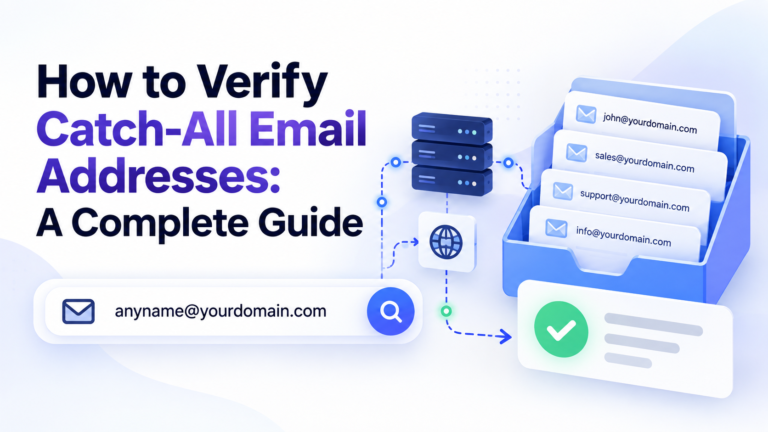
Catch-all domains allow emails to be accepted without a specific address, which makes mailbox verification difficult. Although some are real recipients, others could be so neglected that even if a message is left in their mailbox, they would never know.
This introduces the risk of delivering messages without being able to be sure that the recipient will read or react to them. For this, a very cautious approach is required during email campaigns using such domains.
Disposable
Disposable email addresses are short-lived accounts which are created to be used for a few days only and soon after they are abandoned or deleted.
This type of email address definitely has a negative impact on list quality; they produce very little engagement and may even lead to a higher number of spam complaints, so they are simply not suitable for maintaining communication with the customers and carrying out marketing campaigns in the long term.
With these verification reports at hand, the companies will be able to keep track of their email list, enhance their campaign effectiveness, and be safe from threats to their reputation.
Email Verification vs Email Validation: What's the Difference?
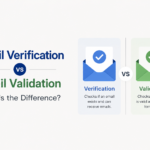
Despite the frequent use of these words interchangeably, it is important to understand that email validation and email verification are two very different concepts. Grasping this knowledge can be very beneficial for companies that wish to have clean email lists.
Email Validation
Email validation is the process of determining the correctness of an email address, whether in terms of the format and the existence of the domain.
It pinpoints syntax errors and misspelled domains in emails, which are prevented from being sent out, allowing companies to avoid basic data entry mistakes and increase the accuracy of the list.
Email Verification
In email list verification, one step higher is taken than email validation. Besides checking the email format and domain as in validation, a verification email would also be sent to the user to confirm if the address is active and can receive emails.
This step involves checking if the email mailbox is available, filtering out disposable/catch-all emails, among other issues, so that bounce rates are minimized, sender’s reputation is safeguarded, and emails are effectively deliverable, leading to more better campaigns.
Knowing the difference between these two processes can help companies in creating better email lists.
Best Practices for Email Verification
Adopting good practices when it comes to email verification will help businesses to have accurate contact lists and ensure successful marketing campaign implementation. Proper verification practices will also ensure proper reputation management as well as communication with the right individuals.
- Frequent Check of Email Lists: Remove any invalid, inactive, and old email addresses from your email list prior to sending out any campaign emails.
- Real-Time Email Validation: Confirm the validity of email addresses at the time of signing up or while filling a contact form.
- Exclude Risky Emails: Do not include temporary emails in the email list and exclude risky email addresses from your contact list.
- Check for High Bounces: Check the number of bounced emails and remove those addresses that often cause bounced emails.
- Data Hygiene: Keep your subscriber information updated by removing duplicates and encouraging subscribers to update their emails.
This way, by implementing these best practices, businesses will be able to construct healthy email lists and increase their email marketing success.
How EmailAnswers.ai Helps You Verify Email Addresses Faster
EmailAnswers.ai streamlines the process of email validation through its quick scan of email addresses as being either valid, invalid, risky, catch-all, or disposable.
The quick and efficient method of validation ensures that businesses have clean lists, low bounce rates, and better deliverability.
Through the identification of low-quality email addresses prior to sending any email campaigns, EmailAnswers.ai offers an efficient way of email marketing.
Conclusion
Verifying email addresses is a necessary process in maintaining a good email list and enhancing marketing results. When companies eliminate invalid, suspicious, and temporary email addresses, they benefit from lower bounce rates, improved deliverability, and safeguarding of their email sender reputations.
An effective email verification software will only send your emails to the right people, thereby giving you more engagement, better campaign performance, and saving your time as the marketer by not targeting customers who are not likely to respond or buy.
FAQs