Learn how to transform your app idea into a successful mobile startup — from prototyping to user acquisition.

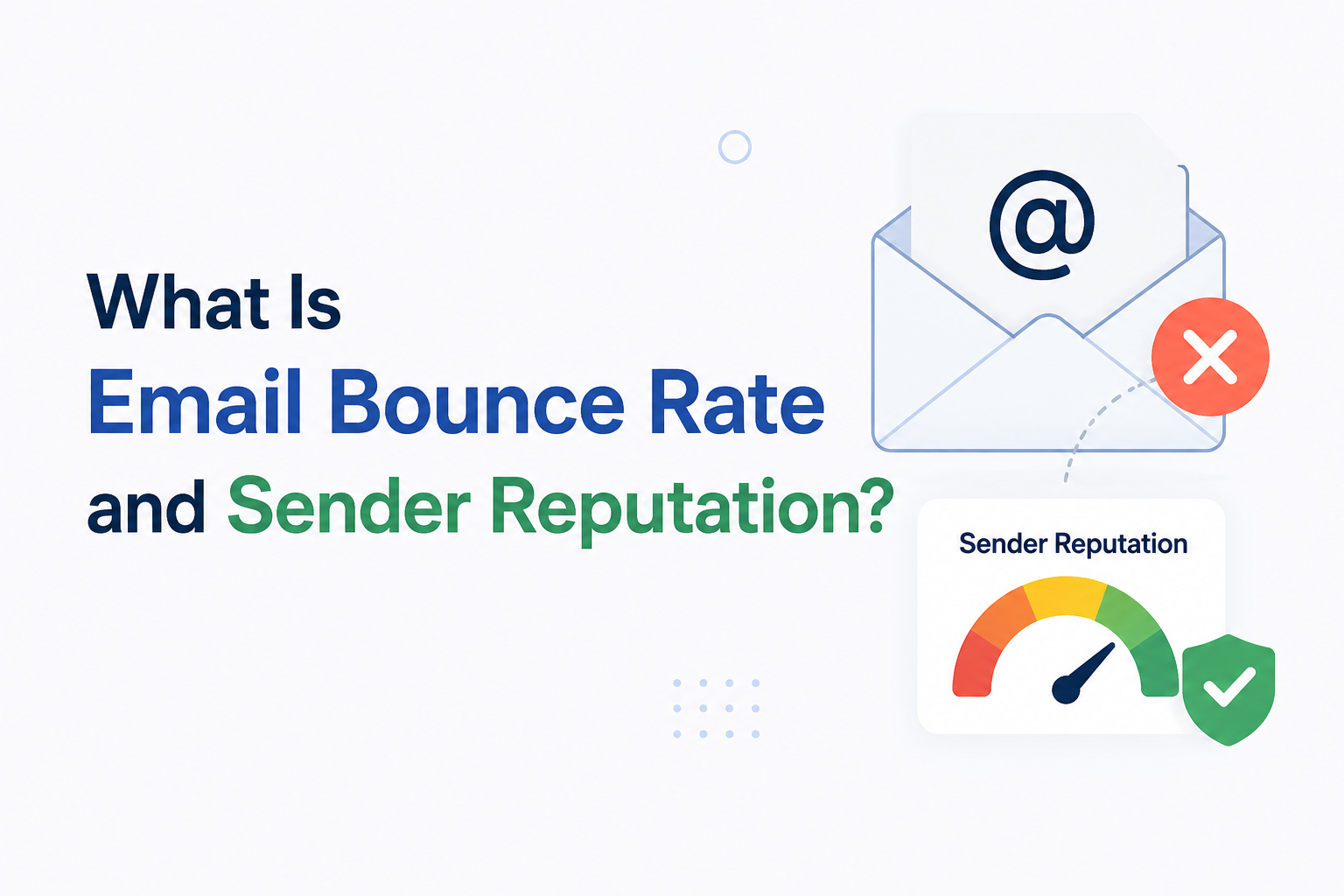
A great email means little if it never reaches the inbox. Behind each and every successful email campaign, there are two most important factors.
- Bounce rate
- Sender reputation
One shows how often your emails fail to reach recipients, while the other reflects how email providers view your sending behavior. Understanding both can help businesses protect better deliverability, maintain more cleaner lists, and improve their chances of reaching the right audience.
Email bounce rate is a measure of the number of emails that are not delivered to the recipients. Meanwhile, email sender reputation is how the email service providers (ESPs) judge your sending behavior.
So, a high number of bouncing emails can indicate you have a low-quality distribution list or your email addresses have expired. On the other hand, sender reputation also considers elements like spamming, engagement levels, and frequency of sending.
How a High Bounce Rate Damages Your Sender Reputation

When the bounce rate is high, it may alert the email provider that your mailing list is not well-managed. This will have an impact on how the email provider assesses and delivers your emails.
1. Indicates Poor Quality of the Email List
If many emails bounce, it can be seen as evidence that the list from which you are sending is composed of outdated, invalid, or even incorrectly gathered email addresses.
If you keep sending emails to invalid or inactive addresses, then the problem will contribute to lowering the quality of your sender’s reputation. In turn, this will negatively influence the processing of your future campaigns.
2. Decreases Deliverability of Emails
Reputation of the sender is one of those factors that influence the delivery of the email to the inbox of its recipient. The higher your bounce rates are, the more questions arise regarding the legitimacy of your sending activities, and therefore, it becomes difficult for your emails to reach the destination.
As a result emails may experience problems with delivery irrespective of their having been sent to legitimate addresses.
3. Spammers use Filtering Tools
E-mail services analyze different indicators when determining whether the arriving messages deserve their way to the inbox. The higher your email bounce rate is, the more negative signals will be received by the e-mail services.
Along with the complaints and the lack of engagement. It may make you the target of even more intensive filtering, which means that all of your future marketing efforts may fail.
4. Affects Future Campaigns
It is important to note that the sender reputation can be transferred from one campaign to another. That means that even though your previous mailings were poorly perceived, you can still be viewed negatively in future email services due to your past campaigns.
It can affect the performance of future campaigns, and you need to keep your contacts up-to-date.
5. Reduces Audience Outreach
Being associated with a bad sender reputation could end up having a negative impact on how well you can contact the correct recipients through your email marketing campaigns.
Even if you have good quality content and people who subscribe to your emails, problems with delivery could see fewer emails reaching their inbox. Eventually, reduced delivery success may affect the scope of your communication efforts.
An excessively more high bounce rate can slowly undermine your sender reputation, leading to problems with deliveries which may not only be applicable to one particular mailing but also have more broader implications in terms of the overall delivery performance.
The Long-Term Impact of Poor Sender Reputation on Email Deliverability

A poor sender reputation can affect email performance beyond a single campaign. When negative sending signals continue over time, email providers may become less confident in your messages, creating ongoing deliverability challenges.
1. More Emails Will Be Directed to Spam
If a business has a poor sender reputation, there is a possibility that more emails will not be delivered to their inbox. The emails will instead be filtered out and land in spam or other folders.
It will result in a loss of visibility, making it difficult for subscribers to access the important information sent from your company’s email address.
2. Delivery Will Not Be Reliable
Due to the bad sender reputation, emails can be inconsistently delivered at the time of email marketing campaigns. While some of the emails are delivered to the inboxes of the clients, some are not delivered.
This inconsistency makes it very hard for the firm to forecast how an email marketing campaign will perform.
3. Subscriber Engagement Becomes Low
If your emails don’t land in the inboxes as much as they should, there will be less chance for your recipients to actually open, read, and engage with your mail. As a result, the metrics of your email performance can get worse.
The decreased level of engagement will become one more negative signal to your mailing profile. This will lead to a negative cycle of bad deliverability and low engagement.
4. Marketing Campaign Effectiveness Is Affected Negatively
For email marketing campaigns to work, they first need to be delivered. If your sender reputation is not good enough, many emails will be filtered out or blocked.
This means that fewer people will see your marketing message, and you won’t achieve the desired result of high levels of engagement. Even a great subject line or useful content can’t help here.
5. Recovering Reputations is a Gradual Process
In situations where the sender ‘s reputation has been damaged, there is a need for responsible behavior on the sender’s part to restore their reputation.
The elimination of bad addresses, lowering bounce rate, using permissioned lists, and increasing engagement can help to improve your reputation among email providers. Nevertheless, recovering from the negative reputation takes time.
A bad sender reputation may lead to persistent problems in deliverability. Hence, it is critical to diagnose the underlying reasons for failures in sending emails. Let us now see how a specialized solution can address such challenges.
How EmailAnswers.ai Helps Reduce Bounce Rates and Protect Your Sender Reputation
EmailAnswers.ai can assist companies in spotting and rectifying email deliverability problems beforehand which would have affected campaign results.
Companies can benefit from support with the clean-up of email lists, detection of email addresses that are questionable in validity or high-risk, and improved handling of contacts by marketing groups.
EmailAnswers.ai can minimize unnecessary delivery failures caused by emails being rejected. It is a good sender hygiene practice to minimize email problems and sender reputation degradation over time.
When the number of bounce emails goes down and the list’s quality improves, companies can set themselves up for a more dependable platform to send emails on a regular basis and for the messages to land in inboxes.
Best Practices to Maintain a Healthy Sender Reputation
Email reputation maintenance entails proper email list cleaning, management, good practices while sending out emails, and focus on recipient engagement. The strategies that follow will be of great importance in ensuring smooth email sending.
1. Keep Your Email List Clean
We recommend that you periodically check and maintain your e-mail address list by removing those that can no longer be delivered (e.g., invalid, inactive, or frequently bouncing) addresses. Delivering emails to invalid addresses can result in higher bounce rates and the generation of harmful delivery signals.
You should always resort to proven methods before adding new addresses, and keep your list checkup as part of ongoing maintenance. Updating address records also contributes to reducing undelivered emails and allows you to maintain good sender practices.
2. Opt-In Email List
The idea here is to make sure that your emails go exclusively to those who have voluntarily signed up to get your messages or have otherwise given you permission. Stay away from buying or otherwise misusing email lists unless you have good reasons.
Such lists tend to have invalid email addresses and recipients who have never received a request from your side. Email lists with permission generally result in much higher click-through rates and lower complaints. Which helps create stable sending behavior and ultimately safeguards the brand reputation in the long run.
3. Continuously keep an Eye on Bounce Rates
After each campaign, it is best to track bounce rates and look for any errors indicating an unusually high bounce rate, a delivery issue that keeps recurring, or similar things. A sudden spike in bounce rate could signal that some contacts are outdated, poor list acquisition, or technical problems that you might have to look into.
Regular bounce pattern checks give you the opportunity to fix issues at their start point so they won’t become a long term hindrance. If some addresses are always bouncing back, eliminate them from your contacts. At the same time, keep your finger on major bounce change situations to improve the overall quality of your lists and performance of your emails.
4. Do not Overflood the Inboxes
If you send too many emails a short time apart, it is not good for your subscribers and can also result in an increase in the number of complaints, unsubscribes, or disengagements. Create a sending frequency that aligns with your subscribers’ expectations and your campaign strategy.
Maintaining consistency in your sending schedule can help people associate your emails and decide whether they want to interact with the content. Also, stay away from making a sudden jump in the volume of your mail, unless it is supported by well-established patterns of engagement with your subscribers.
5. Keep a Tab on Engagement and Complaints
Track engagement through opens, clicks, unsubscribes, and spam complaints to understand your audience’s reaction to your emails. If engagement drops or complaint numbers go up, that’s a sign you probably should have stopped mailing them long ago.
These metrics will help you to update content, frequency, and targeting. If there are patterns of poor engagement, fixing them on the front end will make an impact on the sender reputation eventually.
Keeping the sender reputation intact is a never-ending process involving constant checks on the email sender’s list, sender behavior, and how the audience interacts with your emails. Once this foundation is in place, you can then work on making sure that email campaigns remain stable even as your audience expands.
Conclusion
Sending a great email is just one aspect of a successful email marketing campaign; however, ensuring that this email will be delivered to your target recipients is another important part of this process.
The high bounce rate can point to issues with your mailing list and ultimately negatively impact the sender’s reputation.
The good news is there are several ways to secure your sender’s reputation, these best practices help to build and keep it positive while ensuring your mail reaches the right recipients.
These include keeping your mailing lists clean and permission-based, watching the bounce rate, managing the send frequency, and taking note of engagement.
FAQs
How does bounce rate affect sender reputation?
High bounce rates could indicate the use of poor lists or practices by the sender with the email service providers. Continuous delivery problems could harm the reputation of the sender.
What is a good email bounce rate?
Bounce rate should be kept low most of the time. Ideally, it would be best if email marketers ensured that the bounce rate was less than 2%.
Can a high bounce rate cause emails to go to spam?
Yes, it can. A high bounce rate can affect the sender reputation negatively. When combined with complaints and low engagement, it can make the emails more likely to end up in spam folders.
How can email verification reduce bounce rates?
The email verification process will help in identifying bad or high-risk email addresses prior to sending out emails. This will result in improving your email deliverability rate and, in turn, enhance your sender reputation and reduce email bounce rate
How often should I clean my email list?
Check your mailing list on a regular basis, especially prior to any big campaign. Senders who mail large amounts need to check their list more often, while small organizations need to keep track of their bounce rate on a weekly or monthly basis.
What is the difference between hard bounces and soft bounces?
A hard bounce occurs when there is no possibility of delivering email because of an invalid address or a non-existent domain name. A soft bounce is a temporary failure in the delivery of the email which includes causes like full inboxes, server problems, or temporary delivery restrictions.
How can I improve my sender reputation?
Use permission-based lists, delete bad email addresses, track bounce rates, minimize spam complaints, remain consistent with your sending, do not send too much mail, and write engaging content.